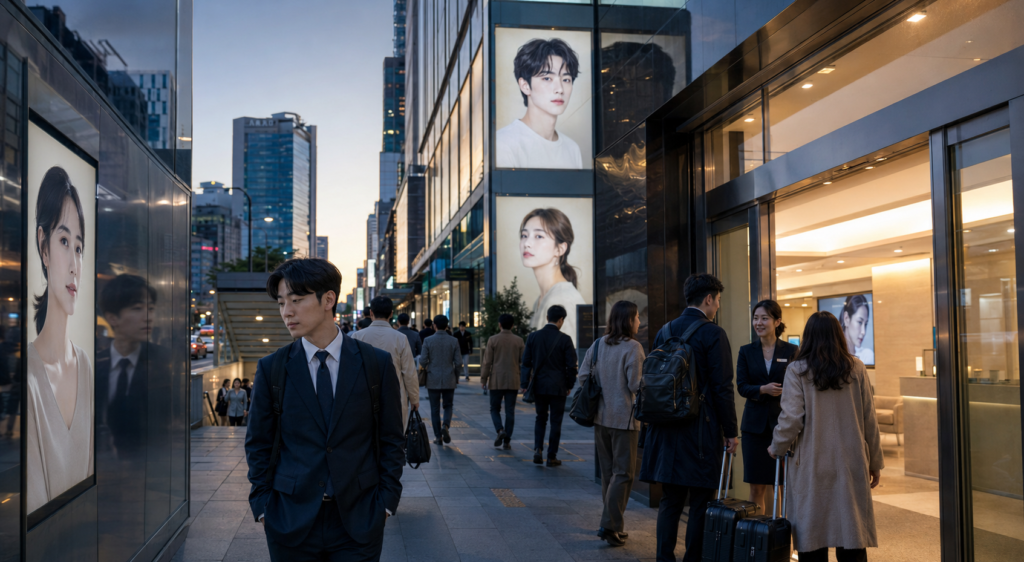

South Korea plastic surgery did not become a global phenomenon because Koreans suddenly developed an “obsession” with beauty. Instead, several forces gradually reinforced one another: older ideas about faces and fortune, colonial modernity, wartime reconstructive medicine, rapid economic development, a highly competitive labor market, celebrity culture, cash-based private medicine, dense urban advertising and, eventually, state-supported medical tourism.
Consequently, cosmetic treatment became unusually visible and socially acceptable. That does not mean every South Korean gets surgery. In the best comparable national survey, 10% of adults said in 2020 that they had undergone plastic surgery at least once. Among women, the figure reached 18%; among men, it was 2%. Meanwhile, Seoul recorded 8%, although its much smaller sample created a wide margin of error. Gallup Korea
The familiar claim that double eyelid surgery “does not count as plastic surgery anymore” is therefore partly cultural shorthand. Medically, it remains an operation. Socially, however, some Koreans place small eyelid operations and injections in a softer category, often calling them a procedure rather than surgery. That linguistic distinction shows how normalization can affect both everyday conversation and survey results.
South Korea Plastic Surgery at a Glance
| Question | Best evidence-based answer |
|---|---|
| How many South Korean adults have ever had plastic surgery? | 10% in 2020, or approximately 100 per 1,000 adults |
| How has adult lifetime experience changed? | 2% in 1994, 5% in 2004, 7% in 2015 and 10% in 2020 |
| What was the rate among women in 2020? | 18% nationally |
| What was the rate among men in 2020? | 2% nationally |
| What was the rate in Seoul? | 8% in 2020, but with a margin of error of approximately ±5.7 percentage points |
| Is Seoul proven to have a higher resident surgery rate? | No. Seoul concentrates clinics and foreign patients, but the 2020 resident survey did not show a higher prevalence than the national average |
| Is double eyelid surgery medically a surgery? | Yes. It is a form of blepharoplasty |
| What percentage are in debt because of plastic surgery? | No credible nationally representative percentage exists |
| Does insurance normally pay? | Purely cosmetic operations generally fall outside National Health Insurance coverage |
| Is South Korea an international medical tourism hub? | Yes. It received 2,011,822 foreign patients in 2025, including 233,100 plastic-surgery department patients |
| How concentrated is foreign demand in Seoul? | Seoul received 87.2% of all reported foreign patients in 2025 |
How to Read South Korea Plastic Surgery Statistics
Many viral statistics become misleading because they combine four different units: people, procedures, surgeons and clinic visits.
One person is not one procedure
A patient might undergo two operations during one visit. Another person might receive several injections or skin treatments over a year. Therefore, 100 procedures do not mean 100 different people.
Likewise, lifetime prevalence answers a different question from annual procedure volume. If 10% of adults say they have ever had surgery, that statistic does not mean 10% undergo an operation every year.
| Metric | What it measures | Main limitation |
|---|---|---|
| Lifetime adult prevalence | Percentage of adults who report ever having plastic surgery | Depends on memory and what respondents personally call “surgery” |
| Annual procedures | Number of surgical and non-surgical treatments performed | Repeat patients and multiple procedures count more than once |
| Foreign patients | Administrative count of non-resident foreign patients | Covers all medicine unless separated by department |
| Department patients | Patients seen by a particular specialty | One person can appear in more than one department |
| Plastic surgeons | Estimated number of specialists | Does not reveal how many procedures each surgeon performs |
| Clinic count | Number of registered facilities | A clinic may offer several medical and cosmetic services |
Why the famous “one in five” claim needs context
The often-repeated claim that one in five women in Seoul had undergone cosmetic surgery appeared internationally through a 2012 Economist graphic, which cited an earlier Trend Monitor survey. However, that figure does not form part of the comparable Gallup Korea national series. It also should not become “one in five Koreans” or “half of all young women,” as online retellings frequently suggest. The Economist
Still, the figure is not completely detached from later evidence. Gallup Korea found that 18% of all adult women nationally reported surgery experience in 2020. Rates reached 25% among women aged 19 to 29 and 31% among women in their thirties. Nevertheless, those are gender-and-age subgroups, not the entire population.
The History of Plastic Surgery in South Korea
No single historical event created the South Korea plastic surgery industry. Instead, the modern market emerged through several overlapping stages.
Faces, fortune and gwansang
Korea has a long tradition of gwansang, or facial physiognomy, which interprets facial features as signs of personality, health, relationships or fortune. Versions of the practice reached the Korean Peninsula centuries before modern cosmetic medicine.
However, historical continuity does not prove direct causation. Contemporary Koreans do not automatically choose surgery because they believe in physiognomy. Rather, gwansang supplied an older cultural vocabulary in which facial appearance could represent character and future prospects.
That distinction matters. Otherwise, an ancient belief becomes an easy but simplistic explanation for a modern medical market shaped by capitalism, employment competition and mass media.
Colonial modernity and early double eyelid practices
Modern eyelid surgery did not begin with the Korean War. Japanese physician Mikamo reportedly described an early double-eyelid operation in 1896. Later, Japanese colonial rule in Korea from 1910 to 1945 connected beauty, hygiene and bodily presentation with contested ideas of race and modernity.
Recent historical research found Korean newspaper discussion of eyelid surgery as early as 1927. Hairdresser and beauty entrepreneur Oh Yeop-ju apparently underwent the operation in Japan between 1927 and 1932. Moreover, Korean advertising promoted eyelid tape by 1939. Jung et al., Journal of Craniofacial Surgery
Therefore, the Korean history of double eyelid creation predates American military medicine. Colonial racial hierarchies influenced this period, but so did women’s modern consumer culture, cosmetics and new forms of urban self-presentation.
The Korean War and reconstructive medicine
The Korean War created enormous demand for reconstructive treatment. American military surgeon D. Ralph Millard performed reconstructive work and helped popularize Asian blepharoplasty in the 1950s.
Millard sometimes described the procedure through a racialized “deorientalizing” framework. Nevertheless, historians caution against treating his work as the invention of double eyelid surgery or assuming that contemporary Korean patients simply want to look white. Korean surgeons and consumers later adapted techniques to local facial structures, tastes and social expectations. Stanford Humanities and Sciences
In other words, the war accelerated medical knowledge and institutional development. It did not single-handedly create Korea’s beauty culture.
Building a Korean medical specialty, 1961 to 1975
South Korea gradually transformed wartime reconstructive knowledge into a domestic medical specialty.
| Year | Institutional development |
|---|---|
| 1961 | Lew Jae-duk established a dedicated plastic and reconstructive surgery department at Yonsei University |
| 1966 | More than 30 specialists founded the Korean Society of Plastic and Reconstructive Surgeons |
| 1973 | The government formally recognized plastic surgery as a medical specialty |
| 1974 | The professional society launched its academic journal |
| 1975 | Korea introduced a specialist certification examination |
These milestones created training programs, professional networks and standardized expertise. A 2026 historical review divides the field into wartime introduction, institutional foundation, technical specialization, aesthetic expansion and internationalization. BMC Plastic and Reconstructive Surgery
Economic growth, private medicine and Gangnam
During the 1980s and 1990s, South Korea experienced rapid income growth, urban redevelopment and consumer expansion. Meanwhile, the government’s health system left a large space for private providers and non-covered services.
Cosmetic surgery fitted this model particularly well. It generated private cash revenue, required no National Health Insurance reimbursement and allowed clinics to compete through location, branding and specialization.
Gangnam became the industry’s symbolic center. The district’s redevelopment, wealth and concentration of private clinics turned appearance modification into part of a broader culture of consumption and self-investment.
Asian financial crisis (1997) and “employment surgery”
The 1997 Asian financial crisis intensified competition for stable employment. As companies restructured and young people fought for fewer prestigious jobs, personal presentation gained economic meaning.
The Korean term chwieop seonghyeong, commonly translated as “employment surgery,” described procedures undertaken in the hope of improving job prospects. Likewise, media discussed “marriage surgery” as an investment in relationship opportunities.
Researchers have called this logic an “elective necessity.” A procedure remains technically optional, yet social and economic competition can make it feel compulsory. Holliday et al., “Trading Faces”
However, no strong national evidence proves that cosmetic surgery itself produces employment. The important fact is that many people believe appearance influences opportunity, and employers historically reinforced that belief through photographs and appearance screening.
Hallyu, celebrities and digital marketing
In the 2000s, Korean television, cinema and pop music expanded across Asia. Consequently, South Korean celebrities became reference points for beauty consumers at home and abroad.
Celebrity culture did not create one fixed “Korean face.” Trends changed over time, while clinics offered individualized combinations of eyelid, nose, facial contouring and skin procedures. Still, entertainment imagery promoted exceptionally polished and carefully managed appearances.
At the same time, online communities made recovery stories, photographs and clinic reviews easier to share. Later, smartphone applications transformed procedures into comparable consumer products, with ratings, promotions and time-limited offers.
The 2009 medical tourism strategy
In 2009, South Korea changed its legal and policy framework so registered medical institutions could actively attract foreign patients. The government also developed the Medical Korea brand and supported international promotion, coordinators and registered facilitators.
Therefore, the state did not merely observe an existing industry. It helped convert domestic medical capacity into an export service.
The policy initially covered many specialties, including health screening, internal medicine and complex hospital care. Nevertheless, dermatology and plastic surgery became especially visible because they connected naturally with Hallyu, tourism and K-beauty.
The 2010s: normalization and resistance
By the 2010s, cosmetic services appeared across television, social media, transport advertising and shopping districts. Some families reportedly offered eyelid surgery as a graduation or coming-of-age gift, although no national survey measures how often that happens.
Meanwhile, public resistance became more organized. Critics challenged unrealistic before-and-after advertisements, gendered marketing and the idea that applicants must alter themselves to compete.
Seoul authorities progressively restricted cosmetic advertising in subway stations. Thus, the industry’s expansion produced both normalization and a visible anti-lookism response.
The 2020s: from surgery to medical beauty
The COVID-19 pandemic sharply reduced international medical travel. However, domestic interest continued, while video calls and social media created new forms of facial self-monitoring.
After travel reopened, foreign demand rebounded rapidly. Yet the strongest growth did not come from operations alone. Dermatology, injections, lasers and other outpatient services increasingly dominated medical tourism.
Consequently, South Korea’s current beauty economy extends far beyond plastic surgery. It includes dermatology, cosmetics, digital platforms, tourism, retail and entertainment.
Historical Timeline
| Period | Development | Why it mattered |
|---|---|---|
| Ancient to premodern Korea | Gwansang connected faces with character and fortune | Supplied a cultural language linking appearance and life outcomes |
| 1896 | Mikamo described an early double-eyelid operation in Japan | Shows that the technique predates the Korean War |
| 1910 to 1945 | Japanese colonial modernity shaped beauty and racial discourse | Connected appearance with modern identity and consumer culture |
| 1927 to 1939 | Korean press discussed eyelid surgery and eyelid tape | Confirms prewar Korean demand and awareness |
| 1950s | Wartime reconstruction and Millard’s Asian blepharoplasty work | Expanded surgical knowledge, although within racialized medical ideas |
| 1961 | Yonsei created a dedicated plastic surgery department | Established institutional training |
| 1966 | Specialists founded the national professional society | Built a formal medical community |
| 1973 to 1975 | Specialty recognition, journal and certification | Standardized professional status |
| 1980s to 1990s | Consumer growth and Gangnam clinic concentration | Expanded private aesthetic medicine |
| 1997 onward | Financial crisis and intense job competition | Popularized the idea of “employment surgery” |
| 2000s | Hallyu and digital consumer culture expanded | Turned Korean beauty into a regional cultural export |
| 2009 | Government-backed foreign-patient recruitment began | Created a formal medical-tourism strategy |
| 2010s | Apps, social media and subway advertising expanded | Made comparison, promotion and booking more consumer-like |
| 2017 to 2022 | Blind hiring and advertising restrictions grew | Reflected a public backlash against lookism |
| 2023 to 2025 | Foreign patients rose from 606,000 to 2.01 million | Confirmed South Korea’s position as a major medical tourism hub |
Is Double Eyelid Surgery No Longer Considered Plastic Surgery?
Medically, it remains surgery
Double eyelid surgery creates or reinforces an upper-eyelid crease. Physicians classify it as blepharoplasty, regardless of how ordinary or minor consumers consider it.
The AMA Journal of Ethics describes Asian blepharoplasty as one of Asia’s most common cosmetic operations. Medical normalization therefore does not remove its surgical classification.
Socially, people may place it in a different category
Qualitative research has recorded participants saying that eyelid surgery feels “standard” rather than equivalent to a major operation. Similarly, everyday Korean distinguishes seonghyeong, usually translated as plastic surgery, from siseul, a lighter word often used for a procedure or treatment. UCLA Center for the Study of Women
That distinction can reduce stigma. Moreover, it may cause surveys to undercount injections, laser treatments, thread procedures or minor interventions that respondents do not personally classify as surgery.
It is not simply an attempt to look Western
A Westernization-only explanation overlooks Korean agency and changing local tastes. Patients may seek a crease for makeup application, facial balance or a culturally specific idea of a more alert expression. Those motivations operate inside Korean beauty culture rather than representing a single wish to change ethnicity.
Nevertheless, colonialism and American military medicine remain part of the history. The most accurate interpretation therefore holds two ideas at once: racial politics shaped the technology’s development, while contemporary consumers reinterpret the procedure through localized aesthetics.
Eye procedures dominate consideration, not necessarily all completed treatment
Among the 178 Gallup respondents who had considered surgery but had not undergone it, 51% named the eyes as the body area they had considered. The nose followed at 29%, while the jaw accounted for 5%. Gallup Korea
However, this small subgroup does not describe all completed procedures. It mainly demonstrates the eyelid’s unusually normalized place in cosmetic imagination.
Evolution of Plastic Surgery per Adult in South Korea
The best long-term adult series comes from Gallup Korea. Each survey interviewed approximately 1,500 adults aged 19 or older nationwide, excluding Jeju.
Lifetime plastic surgery experience, 1994 to 2020
| Survey year | Adults who had ever had surgery | Per 1,000 adults | Men | Women |
|---|---|---|---|---|
| 1994 | 2% | 20 | 0.1% | 4% |
| 2004 | 5% | 50 | 1% | 9% |
| 2015 | 7% | 70 | 1% | 14% |
| 2020 | 10% | 100 | 2% | 18% |
Source: Gallup Korea, Appearance and Plastic Surgery Survey.
The reported national prevalence multiplied fivefold between 1994 and 2020. In absolute terms, it increased by eight percentage points.
However, lifetime prevalence naturally rises as more cohorts receive treatment and retain that experience as they age. Therefore, the table should not be interpreted as annual surgery demand.
Plastic surgery experience by age in 2020
| Age group | All adults | Men | Women |
|---|---|---|---|
| 19 to 29 | 13% | 2% | 25% |
| 30 to 39 | 17% | 4% | 31% |
| 40 to 49 | 9% | 1% | 18% |
| 50 to 59 | 8% | 3% | 13% |
| 60 or older | 6% | 1% | 11% |
Adults in their thirties recorded the highest overall rate. Likewise, women in their thirties reached 31%, the highest female age-group figure in the survey.
Interestingly, women aged 19 to 29 fell from 31% in 2015 to 25% in 2020. Nevertheless, both subgroup samples were small enough that sampling variation may explain part of the difference.
What changed from 1994 to 2020?
Several patterns stand out:
- The national lifetime rate rose from 2% to 10%.
- Women consistently reported much higher experience than men.
- The gender gap widened in percentage-point terms.
- Younger and middle-aged adults reported more experience than older respondents.
- In 2020, 12% of all adults had never undergone surgery but had considered it.
- Among non-patients specifically, 13% had considered an operation.
Still, 78% of the entire adult sample reported neither surgery experience nor past consideration. In other words, cosmetic surgery had become significant without becoming universal.
The missing 2021 to 2025 adult series
As of July 2026, no newer public survey reproduces Gallup Korea’s national question and methodology closely enough to extend the series confidently.
Some commercial reports publish much larger estimates. However, they often count procedures rather than unique adults, combine surgery with non-surgical dermatology or rely on clinic projections. Therefore, they cannot replace a representative population survey.
Seoul Plastic Surgery Data
Seoul resident prevalence in 2020
| Measure | South Korea | Seoul |
|---|---|---|
| Adults who had ever had plastic surgery | 10% | 8% |
| Adults per 1,000 with lifetime experience | 100 | 80 |
| Never had surgery but had considered it | 12% of all adults | 9% of all adults |
| Said appearance matters in life | 89% | 88% |
| Said surgery may be acceptable for employment or marriage | 67% | 61% |
| Survey sample | 1,500 | 293 |
| Approximate margin of error | ±2.5 points | ±5.7 points |
The Seoul result creates an important warning. The capital’s extraordinary clinic visibility does not prove that a larger percentage of its residents undergo surgery.
Moreover, Seoul’s 8% estimate has a broad sampling interval because only 293 Seoul residents participated. Statistically, researchers cannot confidently distinguish it from the 10% national result.
Why there is no honest Seoul historical curve
Gallup provides a national trend for 1994, 2004, 2015 and 2020. However, the published report only provides the detailed regional breakdown for 2020.
Consequently, an annual or decade-by-decade Seoul prevalence chart would require invented values or incompatible sources. A responsible analysis must show the single reliable Seoul point and then use separate market indicators for clinic and foreign-patient concentration.
Seoul’s market concentration
| Indicator | Year | Seoul or Gangnam result | Meaning |
|---|---|---|---|
| Resident adults reporting surgery experience | 2020 | 8% | Lifetime prevalence among Seoul residents |
| Plastic-surgery clinics in Gangnam | 2024 | 457, according to registration data reported by Business Insider | Concentration of specialist supply in one district |
| Foreign patients, all specialties | 2024 | About 1 million, 85.4% of the national count | Medical tourism concentration |
| Foreign patients, all specialties | 2025 | 1,755,002, 87.2% of the national count | Even greater capital concentration |
| Registered foreign-patient institutions | 2025 | 2,555, or 62.5% of the national total | Includes many specialties, not only plastic surgery |
The 457-clinic figure illustrates Gangnam’s density but does not mean all Seoul residents use those clinics. Many facilities serve residents from other provinces and international travelers. Business Insider
Annual Procedures per Capita: What Can and Cannot Be Calculated
The strongest country-level procedure estimate comes from 2011
The International Society of Aesthetic Plastic Surgery estimated that board-certified plastic surgeons in South Korea performed 258,350 surgical and 391,588 non-surgical procedures in 2011.
Using a resident population of roughly 50 million gives the following rates:
| 2011 measure | Estimated procedures | Procedures per 1,000 residents |
|---|---|---|
| Surgical | 258,350 | 5.2 |
| Non-surgical | 391,588 | 7.8 |
| Combined | 649,938 | 13.0 |
Source: ISAPS Global Survey 2011.
These estimates helped create South Korea’s “highest per capita” reputation. Nevertheless, the figures count procedures, not people. They also include repeat treatments and potentially foreign patients.
Furthermore, ISAPS focused on board-certified plastic surgeons. Dermatologists, other physicians and unregistered activity could fall outside the estimate.
The 2011 surgical mix
| Procedure | Estimated number in South Korea |
|---|---|
| Lipoplasty | 51,200 |
| Breast augmentation | 35,325 |
| Rhinoplasty | 31,863 |
| Blepharoplasty | 29,050 |
| Abdominoplasty | 19,800 |
Although eyelid surgery had enormous cultural visibility, the ISAPS model did not place it first by national surgical volume in 2011. That contrast shows why cultural symbolism and estimated procedure rankings should remain separate.
Why a current per-capita procedure number is unavailable
The latest ISAPS survey, covering 2024 procedures, estimated 2,808 plastic surgeons in South Korea. That gave the country the world’s fifth-largest specialist population and 4.8% of the estimated global total. ISAPS Global Survey 2024
However, ISAPS did not publish a representative 2024 South Korean country procedure total. South Korea therefore appears in the surgeon ranking but not in the country procedure table.
It would be incorrect to multiply the number of surgeons by a global average. Such a calculation would ignore differences in workloads, clinic types, non-surgical treatment and survey participation.
Growth in specialist supply
| Year | Estimated plastic surgeons | Change from 2011 |
|---|---|---|
| 2011 | 1,250 | Baseline |
| 2024 | 2,808 | Approximately +125% |
South Korea had roughly 55 plastic surgeons per million residents in 2024, using a population near 51 million. Still, surgeon density alone cannot show how many residents underwent treatment.
Why Did Cosmetic Surgery Become So Normalized?
Appearance carries perceived social value
In 2020, 89% of South Korean adults told Gallup that appearance mattered in life. The figure reached 93% among people aged 19 to 29 and 94% among women in that age group.
Moreover, 61% of adults said they paid attention to their appearance. The rate reached 79% among people aged 19 to 29, 71% among women and 49% among men.
However, attention to appearance did not simply equal low self-esteem. Forty-one percent said they felt confident about their appearance, while 33% lacked confidence and 26% gave a neutral answer. Thus, beauty work can operate as ordinary grooming and status management, not only as a response to self-hatred.
Competitive self-management
South Korea’s rapid educational expansion created a highly qualified workforce. At the same time, prestigious jobs remained limited. Consequently, applicants looked for small advantages that could differentiate otherwise similar résumés.
Appearance became one element in a larger package of credentials, speech, clothing, manners and personal branding. Plastic surgery entered this system as a possible investment, especially when clinics marketed it as practical rather than indulgent.
Family support can reduce the financial barrier
Qualitative studies describe families paying for or contributing to procedures, especially around graduation. Parents may interpret surgery as support for a child’s future rather than luxury consumption.
Nevertheless, researchers have not measured the national frequency of such gifts. The familiar “every Korean receives eyelid surgery for graduation” story therefore exaggerates a documented practice into a universal tradition.
Dense competition lowers stigma and changes prices
A large number of clinics compete for similar customers in Seoul. As a result, marketing becomes aggressive, consultations become highly commercial and smaller procedures can seem economically accessible.
Competition can also create package discounts and frequent promotions. Yet low advertised prices may omit additional charges or encourage multiple treatments, so price competition does not automatically protect consumers.
Hallyu exports a polished appearance economy
K-pop, Korean television and social media export professionally managed faces, skin, fashion and styling. However, celebrities also work under lighting, makeup, editing and agency control.
When audiences interpret those images as ordinary human appearance, standards become harder to reach. Clinics then sell medical intervention as one path toward an image that media production helped create.
Beauty apps turn medicine into a marketplace
Digital platforms allow users to compare reviews, photographs, prices and limited-time promotions. Therefore, medical services can resemble shopping products.
This model reduces information costs, but it can also reward dramatic advertising and high sales volume. Moreover, reviews may not reveal long-term outcomes, revision costs or whether a promotion accurately represents most patients.
Does Being Considered Unattractive Make Employment Harder?
The short answer is that appearance bias has existed in South Korean recruitment, but the evidence does not prove that surgery reliably produces a job.
What surveys show
In 2020, 67% of adults said a person might undergo plastic surgery for employment or marriage. Women showed greater acceptance at 73%, compared with 59% of men. Gallup Korea
Earlier Gallup questions separated gender and purpose:
| Survey year | Said a man might have surgery for employment | Said a woman might have surgery for marriage |
|---|---|---|
| 1994 | 48% | 38% |
| 2004 | 66% | 61% |
| 2015 | 65% | 66% |
The sharp rise occurred before 2004, following the financial crisis and changing labor market.
Employers historically requested photographs
A Saramin job-portal survey reported that 93% of participating firms required applicant photographs. Nearly half of 312 human-resource managers said they had rejected an applicant because of appearance. However, the survey predates major blind-hiring reforms and does not represent every employer. IZA World of Labour
Likewise, interviews with personnel officers at 15 firms found extensive screening of personal information unrelated to job performance. Because the study included only 15 organizations, it provides evidence of practices rather than a national prevalence estimate. Hlasny and Jeung
The law has changed, but loopholes remain
Public institutions adopted blind hiring in 2017 and stopped requesting applicant photographs and unrelated personal information in many recruitment processes.
In 2019, amendments to the Fair Hiring Procedure Act prohibited employers with at least 30 employees from requesting job-irrelevant information about appearance, height or weight. The law also covers birthplace, marital status, property and some family information. Korea Legislation Research Institute
Nevertheless, private employers may still request an identification photograph under some interpretations. Smaller firms also fall outside the Act’s 30-employee threshold.
Evidence hierarchy: pressure versus proven outcome
| Claim | Evidence assessment |
|---|---|
| Appearance has influenced some hiring decisions | Supported by employer surveys, photo requirements and legal reforms |
| Applicants believe appearance matters | Strongly supported |
| Appearance pressure can motivate surgery | Supported by surveys and qualitative research |
| Cosmetic surgery guarantees better employment | Not supported |
| People considered unattractive cannot get jobs | False and overly deterministic |
| Blind hiring has completely removed appearance bias | Not demonstrated |
Therefore, it is more accurate to say that lookism raises perceived and sometimes real barriers. It does not determine every career outcome, and surgery does not provide a scientifically established employment return.
Mirrors Everywhere: Observation or Measured Fact?
Travel videos frequently claim that South Korea places mirrors everywhere so people continuously inspect themselves. Journalists and ethnographers have indeed described mirrors in subway areas, schools, elevators, restaurants, shops and public corridors.
A 2012 Yonhap feature reported strong mirror use among both men and women and connected it with growing appearance consciousness. Yonhap News Agency
However, no national mirror census exists. Researchers cannot calculate the number of mirrors per station or compare South Korea reliably with other countries.
Furthermore, mirrors serve practical purposes. Shops use them for clothing, stations may use reflective surfaces for visibility, and buildings use them to create a sense of space. Consequently, the existence of a mirror does not prove an intentional program of beauty pressure.
The stronger claim is cultural: frequent mirrors, cameras, advertisements and edited images create an environment of repeated self-observation. That conclusion rests on accumulated observation rather than a national statistic.
Plastic Surgery Advertising in the Seoul Subway
Unlike the mirror claim, cosmetic advertising in Seoul’s transport system generated measurable complaints and policy responses.
The era of saturation
By the mid-2010s, stations near Apgujeong and Gangnam displayed extensive clinic advertising. Some locations featured cosmetic businesses across most available advertising surfaces.
In 2016, Seoul subway lines 1 through 8 carried approximately 143,000 advertisements and generated about KRW 44 billion in advertising revenue. On lines 1 through 4, passengers filed 1,182 advertising complaints; 91.4% involved plastic surgery or the representation of women. The Korea Times
NPR documented floor-to-ceiling clinic advertising in Apgujeong station and reported complaints that the images promoted lookism and gender discrimination. NPR via WUNC
Restrictions and planned removal
Seoul introduced limits in 2014, including a target that cosmetic surgery should occupy no more than 20% of advertisements in one location. Authorities also restricted before-and-after imagery and certain suggestive claims.
Then, in 2017, Seoul Metro announced plans to remove cosmetic surgery advertisements through new contracts by 2022. It also planned more art-oriented and advertisement-free station space.
Advertising did not disappear permanently
The policy never removed every form of medical promotion from the entire metropolitan network. Different operators, contracts and station areas followed different schedules.
Moreover, late-2025 reporting indicated that Seoul Metro again allowed selected medical and cosmetic advertisements under conditional review as it sought advertising revenue. The revised screening reportedly restricted direct price inducements, unverifiable promises and aggressive before-and-after presentations. Newsis
Therefore, videos from different years can show very different environments. Older footage may document peak saturation, while newer footage may show either restricted spaces or the partial return of approved advertisements.
How Much Plastic-Surgery Debt Exists?
The honest percentage is unknown
No credible national survey provides the percentage of South Koreans who currently carry debt specifically because of cosmetic surgery.
The Gallup Korea surveys ask whether respondents had surgery or considered it, but they do not ask how they financed it. Meanwhile, household-debt statistics classify debt by loan and lender type rather than by individual purchase.
Consequently, statements such as “X% of Koreans are indebted because of plastic surgery” lack a defensible denominator unless they name a specific, representative survey.
What evidence does exist?
Researchers and journalists have documented:
- People using credit cards or installment balances for cosmetic treatment.
- Consumers taking general personal loans.
- Families paying all or part of a procedure.
- Clinics requiring deposits and later balances.
- Cases involving high-cost private or illegal lending.
- Financial pressure associated with repeat or revision procedures.
However, individual stories cannot establish prevalence. A person with a credit-card balance may also use that card for rent, education or ordinary consumption, making cause-specific debt difficult to identify.
Evidence verdict
| Claim | Verdict |
|---|---|
| Some people borrow for cosmetic surgery | Documented |
| Predatory cosmetic-related lending has occurred | Documented in cases |
| Family members sometimes pay | Supported qualitatively |
| Many patients use cards or installments | Plausible and frequently reported, but no national percentage exists |
| A known percentage of South Koreans are indebted because of surgery | Unsupported |
| South Korea’s household-debt ratio can serve as the plastic-surgery debt rate | Incorrect |
How Do South Koreans Pay for Cosmetic Procedures?
Purely cosmetic procedures usually operate as private, out-of-pocket medicine. The National Health Insurance Service explicitly excludes cosmetic and plastic surgery that lacks medical necessity. National Health Insurance Service
Main payment channels
| Payment channel | How it functions socially | What is known |
|---|---|---|
| Personal savings | Patient pays accumulated funds directly | Likely common, but no national share exists |
| Current income | Smaller treatments come from ordinary monthly spending | Particularly relevant to lower-cost repeat procedures |
| Family contribution | Parents or relatives pay or contribute | Documented in qualitative studies, especially around graduation |
| Credit card | Patient pays the clinic by card | Cards are widely used in South Korea |
| Card installments | Purchase divides across monthly card bills | Available to eligible domestic cardholders, but no cosmetic-specific usage rate exists |
| Personal credit | A bank, finance company or other lender provides general credit | Purpose may not appear in national lending data |
| Clinic payment schedule | Clinic collects a deposit and later balance | Policies vary considerably |
| Insurance | Applies only when treatment meets medical or reconstructive criteria | Purely aesthetic treatment generally remains excluded |
This structure helps explain why the industry can expand without appearing clearly in public health expenditure. Because National Health Insurance does not normally reimburse elective cosmetic care, the transactions sit inside the private consumer economy.
Moreover, family payment can reduce the need for formal debt. By contrast, credit can spread the cost over time while increasing the final amount paid.
For international patients, clinics commonly receive private payment through cards, transfers or deposits. However, foreign patients often lack access to Korean domestic installment systems. No official dataset shows how international plastic-surgery patients divide payments among these methods.
Is South Korea an International Plastic Surgery Hub?
Yes, although “medical tourism hub” describes the evidence more accurately than “plastic surgery alone.”
Total foreign-patient evolution
| Year | Foreign patients, all specialties | Change or context |
|---|---|---|
| 2009 | 60,201 | First year of the formal foreign-patient attraction system |
| 2019 | 497,464 | Pre-pandemic record |
| 2020 | 117,069 | Pandemic-related collapse |
| 2023 | 605,768 | Recovery exceeded the 2019 level |
| 2024 | 1,170,467 | Up 93.2% from 2023 |
| 2025 | 2,011,822 | Up 71.9%, first year above 2 million |
The 2025 count was approximately 33 times the 2009 figure. It covered patients from 201 countries and brought the cumulative total since 2009 to approximately 7.06 million. Yonhap News Agency
Foreign plastic-surgery patients
| Year | Plastic-surgery department patients | Context |
|---|---|---|
| 2019 | 90,494 | Pre-pandemic benchmark |
| 2023 | 114,074 | 26% above 2019 |
| 2024 | Approximately 141,875 | Derived from the official 2025 growth rate |
| 2025 | 233,100 | Up 64.3% from 2024 |
The 2025 plastic-surgery figure was about 158% higher than in 2019. The Korea Herald, Yonhap News Agency
However, these are department-based patient counts. A foreign patient who visits both dermatology and plastic surgery appears once in each departmental category.
Dermatology has become larger than surgery
| Foreign-patient department | 2024 share | 2025 share |
|---|---|---|
| Dermatology | 56.6% | 62.9% |
| Plastic surgery | 11.4% | 11.2% |
| Integrated internal medicine | 10.0% | 9.2% |
| Health screening | 4.5% | 3.1% |
In 2025, dermatology recorded approximately 1.313 million foreign patients, compared with 233,100 for plastic surgery. Thus, international K-beauty medicine increasingly centers on outpatient skin and non-surgical care.
The departmental percentages use departmental patient totals, not the unique national patient count. Because one person may visit several specialties, readers should not multiply the shares directly by 2,011,822.
Seoul’s extraordinary dominance
| Year | Foreign patients treated in Seoul | National share |
|---|---|---|
| 2024 | About 1 million | 85.4% |
| 2025 | 1,755,002 | 87.2% |
In 2025, Seoul contained 2,555 registered foreign-patient institutions, representing 62.5% of the national total. Again, those institutions include dermatology, internal medicine, dental care, health screening and other specialties.
The concentration remains remarkable. Nearly nine out of ten foreign patients in the administrative data received care in Seoul.
Main source countries in 2025
| Rank | Country or territory | Patients | Share of foreign-patient total |
|---|---|---|---|
| 1 | China | 618,973 | 30.8% |
| 2 | Japan | 600,009 | 29.8% |
| 3 | Taiwan | 185,715 | 9.2% |
| 4 | United States | 173,363 | 8.6% |
| 5 | Thailand | 58,124 | 2.9% |
China and Japan together produced 60.6% of foreign patients. Furthermore, the leading country changed from Japan in 2024 to China in 2025.
Why international patients choose South Korea
Several advantages reinforce one another:
- Dense specialist and clinic supply.
- Experience with facial and eyelid procedures.
- Strong dermatology and outpatient infrastructure.
- International recognition of Korean cosmetics.
- Hallyu-driven interest in Korean beauty culture.
- Extensive air connections within East Asia.
- Multilingual clinic coordinators and medical facilitators.
- Competitive private pricing in some service categories.
- Tourism infrastructure concentrated around Seoul.
- Government promotion through Medical Korea.
Still, international popularity does not prove uniform quality. Medical tourism complicates follow-up, communication and dispute resolution. Moreover, high-volume marketing can create pressure to purchase additional treatments.
The Government’s Role in the Beauty Economy
South Korea’s government did not create domestic cosmetic demand. Nevertheless, policy helped internationalize the industry.
First, authorities allowed registered institutions to recruit foreign patients in 2009. Next, government-affiliated organizations developed accreditation, provider registration, international conferences and promotional material. Later, tourism and cultural export strategies connected Korean medicine with K-beauty and Hallyu.
In 2024, the Ministry of Health and Welfare described South Korea as an emerging Asian medical-tourism center after the foreign-patient count reached 1.17 million. Seoul attracted 85.4% of those patients. Ministry of Health and Welfare
By 2025, the number exceeded two million. Consequently, government language shifted from simple expansion toward “quality growth,” monitoring and sustainability.
This policy produces a tension. The state benefits economically from medical tourism while also regulating misleading advertising, patient safety and excessive concentration.
Has South Korea’s Beauty Culture Faced a Backlash?
Yes. South Korean society does not speak with one voice about cosmetic surgery.
Feminist campaigns have criticized rigid beauty expectations and the financial and emotional labor required to meet them. Subway passengers have complained about advertising, while younger users increasingly expose editing, sponsorships and clinic marketing online.
Blind hiring also represented an institutional response to lookism. Likewise, advertising limits acknowledged that public transport should not continuously tell passengers that their faces require correction.
However, backlash and consumption can coexist. A person may criticize beauty pressure while still receiving treatment, wearing makeup or using skincare. Therefore, declining stigma does not necessarily mean wholehearted approval.
Common Myths and What the Data Say
| Popular claim | Evidence-based correction |
|---|---|
| “Every Korean has plastic surgery.” | Gallup found 10% of adults in 2020, not a majority |
| “Half of young Korean women have surgery.” | Gallup found 25% among women aged 19 to 29 and 31% among women in their thirties |
| “Seoul residents have the highest rate.” | The 2020 survey found 8% in Seoul versus 10% nationally |
| “Double eyelid surgery is not surgery.” | It remains blepharoplasty medically, although people may describe it casually as a procedure |
| “American doctors invented double eyelid surgery during the Korean War.” | Documented operations predate the war, and Korean discussion appeared by the 1920s |
| “Koreans only want to look white.” | Colonial and racial history matters, but contemporary motivations and aesthetics are localized and diverse |
| “Plastic surgery guarantees employment.” | Appearance bias exists, but no evidence shows that surgery guarantees a job |
| “A known percentage are in plastic-surgery debt.” | No nationally representative percentage exists |
| “Two million foreigners went to Korea for plastic surgery in 2025.” | Two million received all kinds of medical care; 233,100 visited plastic-surgery departments |
| “Subway cosmetic advertisements were permanently banned.” | Seoul restricted them heavily, but selected ads later returned under review |
| “Every public mirror exists to increase insecurity.” | Mirrors are culturally visible, but no statistical evidence proves a coordinated purpose |
| “The latest ISAPS report gives Korea’s annual procedure total.” | The 2024 report estimates surgeon numbers but does not provide a representative Korea procedure total |
Data Curiosities
Seoul is more visible, but not more prevalent in the resident survey
Gangnam contains one of the world’s densest aesthetic-clinic clusters. Nevertheless, Seoul’s 2020 lifetime resident rate was 8%, below the 10% national estimate.
That result demonstrates the difference between a market center and a patient residence.
The highest regional survey result was not Seoul
Gallup reported 17% for Gwangju and Jeolla in 2020. However, the regional sample contained only 150 people and carried a margin of error near ±7.7 percentage points.
Therefore, the result does not establish a permanent regional ranking.
Most adults say appearance matters, but most have not had surgery
In 2020, 89% said appearance mattered, while only 10% reported surgery. Thus, skincare, hairstyling, clothing, exercise, makeup and ordinary grooming absorb much more appearance-related activity than surgery alone.
Women in their thirties reported more surgery than women in their twenties
The 2020 rates reached 31% for women in their thirties and 25% for women aged 19 to 29. Lifetime accumulation, higher income and changing cohort exposure may all contribute.
Plastic-surgeon supply more than doubled
ISAPS estimated 1,250 specialists in 2011 and 2,808 in 2024. That represents growth of approximately 125%.
International growth now favors dermatology
Foreign plastic-surgery patient numbers grew rapidly, but dermatology expanded even faster. In 2025, dermatology served more than five times as many foreign patients as plastic-surgery departments.
Appearance concern also affects men
Only 2% of men reported surgery experience in 2020. However, 49% said they paid attention to their appearance, and 59% accepted the possibility of surgery for employment or marriage.
Therefore, men increasingly participate in the beauty economy even though the gender gap in surgical experience remains large.
Frequently Asked Questions
How common is plastic surgery in South Korea?
The best representative estimate found that 10% of adults had undergone plastic surgery at least once by 2020. Rates varied substantially by gender and age.
What percentage of South Korean women have had surgery?
Gallup Korea found 18% among adult women in 2020. The figure reached 25% among women aged 19 to 29 and 31% among women in their thirties.
What percentage of Seoul residents have had surgery?
The 2020 estimate was 8%, or about 80 per 1,000 adults. Nevertheless, the Seoul sample’s wide margin of error prevents precise comparison with the national rate.
Is double eyelid surgery common?
Yes, it has a highly normalized cultural position. Among adults who had considered surgery without undergoing it, 51% named the eyes. Still, that result does not equal a national procedure count.
What percentage of Koreans are indebted because of plastic surgery?
No reliable national percentage exists. Some patients use credit, but public debt datasets do not isolate cosmetic surgery as a borrowing purpose.
How do people normally pay?
Purely aesthetic care generally requires private payment. Reported channels include savings, current income, family contributions, credit cards, installment balances, personal credit and clinic payment schedules.
Does National Health Insurance cover cosmetic surgery?
It generally excludes operations performed only for appearance. Treatment may receive coverage when it meets separate medical or reconstructive criteria.
Does appearance affect employment in South Korea?
Historical photo requirements and employer surveys support the existence of appearance bias. However, surgery does not guarantee employment, and legal reforms now restrict requests for job-irrelevant physical information.
Are plastic surgery advertisements still common in the Seoul subway?
They were extremely common during the 2010s. Seoul later restricted or removed many of them. Selected medical advertisements reportedly returned under tighter review in late 2025, so current visibility varies by station and contract.
Is South Korea the world’s plastic surgery capital?
The label reflects high specialist density, the influential 2011 per-capita estimate, Gangnam’s clinic concentration and large medical-tourism flows. Nevertheless, recent data do not provide a complete national annual procedure count for direct current ranking.
Conclusion
The history of South Korea plastic surgery is not a story about a uniquely vain population. It is the history of a system that gradually connected appearance with modernity, medical expertise, consumer choice, employment competition, celebrity culture and export policy.
The strongest evidence also corrects the most dramatic stereotypes. In 2020, one in ten adults reported ever having plastic surgery, not a majority. Seoul dominated clinic visibility and foreign medical tourism, yet its resident prevalence estimate was 8%. Likewise, double eyelid surgery remained medically surgical even when everyday language minimized it.
Employment pressure and lookism are real social concerns. Still, no evidence shows that cosmetic surgery guarantees professional success. Similarly, borrowing for surgery occurs, but no credible national statistic reveals what percentage of Koreans carry cosmetic-surgery debt.
Finally, South Korea has unquestionably become an international medical hub. The country received more than two million foreign patients in 2025, including 233,100 plastic-surgery department patients. However, dermatology now represents the larger engine of K-beauty medical tourism.
South Korea’s experience therefore offers a broader lesson. When medicine, advertising, labor competition and entertainment repeatedly assign economic value to appearance, individual “choice” becomes difficult to separate from social pressure. At the same time, public resistance, advertising restrictions and blind-hiring reforms show that those pressures remain contested rather than culturally inevitable.
References
- American Medical Association Journal of Ethics. “Blepharoplasty in Asian Patients: Ethnic and Ethical Implications.” https://journalofethics.ama-assn.org/article/blepharoplasty-asian-patients-ethnic-and-ethical-implications/2010-12
- BMC Plastic and Reconstructive Surgery. “From a Stab Wound to a Surgical Specialty,” 2026. https://link.springer.com/content/pdf/10.1186/s44452-026-00027-7.pdf
- Business Insider. “Everyone Used to Want Instagram Face. Now K-Face Is All the Rage,” 2025. https://www.businessinsider.com/south-korea-plastic-surgery-upselling-k-face-instagram-face-tourism-2025-4
- Gallup Korea. “Perceptions of Appearance and Plastic Surgery,” 2020. https://www.gallup.co.kr/dir/GallupReport/GallupReport%2820200409%29_%EC%99%B8%EB%AA%A8%EC%99%80%EC%84%B1%ED%98%95%EC%88%98%EC%88%A0.pdf
- Hlasny, Vladimir, and Hui-Jeen Jeung. “Applicant Screening Practices at Korean Firms.” https://www.e-asianwomen.org/Synapse/Data/PDFData/0274AW/aw-30-3-57.pdf
- Holliday, Ruth, et al. “Trading Faces: The Korean Look and Medical Nationalism in South Korean Cosmetic Surgery Tourism.” https://eprints.whiterose.ac.uk/id/eprint/109548/1/Trading%20Faces%20FINAL%20DBell.pdf
- International Society of Aesthetic Plastic Surgery. Global Survey 2011. https://www.isaps.org/media/5fynfz2v/global-survey-full-report-2011.pdf
- International Society of Aesthetic Plastic Surgery. Global Survey 2024. https://www.isaps.org/media/oogpzodr/isaps-global-survey_2024.pdf
- IZA World of Labour. “‘Blind’ Job Applications to Be Implemented in South Korea.” https://wol.iza.org/news/blind-job-applications-in-south-korea
- Jung et al. “Creating Double Eyelids in the Japanese Colonial Period,” Journal of Craniofacial Surgery, 2024. https://journals.lww.com/jcraniofacialsurgery/fulltext/2024/09000/creating_double_eyelids_in_the_japanese_colonial.89.aspx
- Korea Health Industry Development Institute. 2024 Foreign Patient Statistical Analysis. https://www.khidi.or.kr/board/view?linkId=48933177&menuId=MENU00085
- Korea Legislation Research Institute. Fair Hiring Procedure Act. https://elaw.klri.re.kr/eng_mobile/viewer.do?hseq=56952&key=&type=new
- Korean Society of Plastic and Reconstructive Surgeons. Society History and Vision. https://www.plasticsurgery.or.kr/eng/society/vision.php
- Ministry of Health and Welfare, Republic of Korea. 2024 Foreign Patient Results. https://www.mohw.go.kr/board.es?act=view&bid=0027&list_no=1485191&mid=a10503010100&nPage=2&tag=
- National Health Insurance Service. Lifelong Health Keeper. https://www.nhis.or.kr/static/html/wbd/g/ebrochure/NHIS_Lifelong_Health_Keeper_ebrochure.pdf
- Newsis. Report on the conditional return of medical advertising to Seoul Metro, 2025. https://nwww.newsis.com/view/NISX20251030_0003384023
- NPR via WUNC. “In Seoul, a Plastic Surgery Capital, Residents Frown on Ads,” 2018. https://www.wunc.org/2018-02-05/in-seoul-a-plastic-surgery-capital-residents-frown-on-ads-for-cosmetic-procedure
- Stanford Humanities and Sciences. “Stanford Scholar Traces the Roots of South Korea’s Cosmetic Surgery Surge,” 2018. https://humsci.stanford.edu/feature/stanford-scholar-traces-roots-south-koreas-cosmetic-surgery-surge
- The Economist. “A Cut Above,” 2012. https://www.economist.com/graphic-detail/2012/04/23/a-cut-above
- The Korea Times. “Seoul Metro to Ban Plastic Surgery Ads by 2022,” 2017. https://www.koreatimes.co.kr/southkorea/society/20171128/seoul-metro-to-ban-plastic-surgery-ads-by-2022
- UCLA Center for the Study of Women. “The Cost of Beauty: The Economics of Plastic Surgery in South Korea,” 2018. https://csw.ucla.edu/2018/11/14/the-cost-of-beauty-the-economics-of-plastic-surgery-in-south-korea/
- Yonhap News Agency. Feature on mirror and appearance culture, 2012. https://en.yna.co.kr/view/AEN20120726009400315
- Yonhap News Agency. 2025 Foreign Patient Statistics, published April 2026. https://www.yna.co.kr/view/AKR20260423130200530