
Castelbel Cedar & Moss is a fragranced hand cream in a 60 mL tube, combining a moisturizing formula with green and woody scent notes. In my experience, however, the fragrance reminded me of tangerine peel. Its texture also brought some Korres moisturizers to mind, with a feel I described as somewhat clay-like.
After finishing the tube, my assessment depended heavily on the price. I paid about $2.50 during a World Market promotion and considered that fair. However, I would pass at the roughly $5 full price.
This review brings together those personal impressions, the packaging details, and an analysis of the readable ingredients. That way, you can consider both the sensory experience and the formula before buying.
What is Castelbel Cedar & Moss?
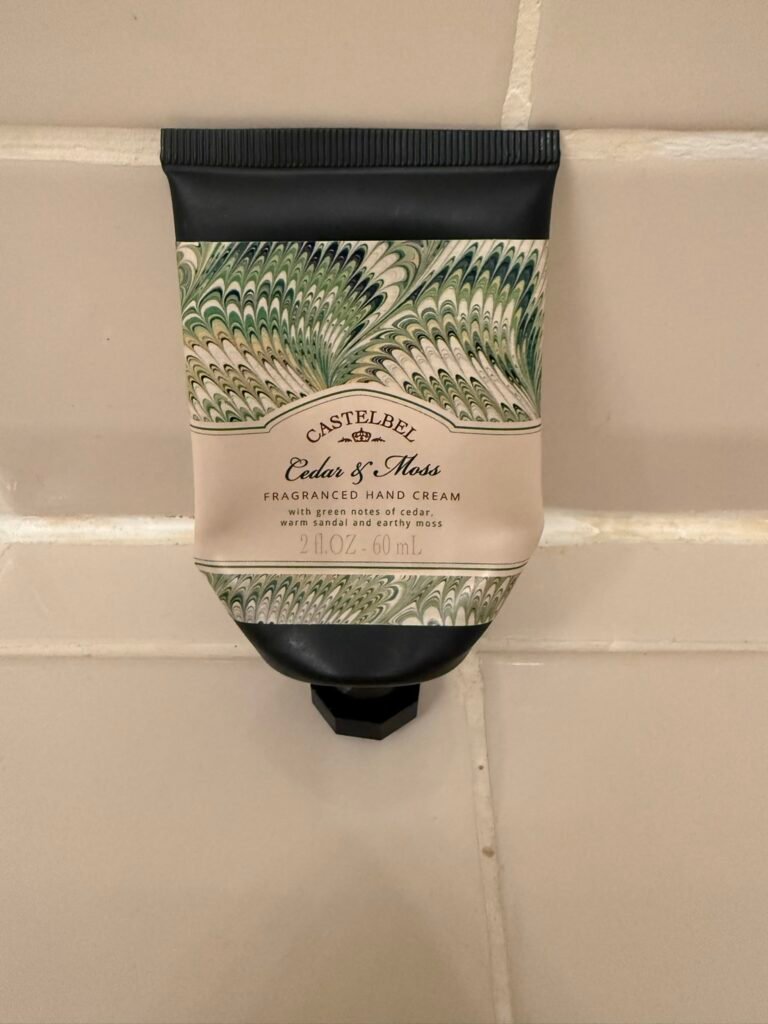
The front label identifies this product as a fragranced hand cream. Therefore, it combines everyday cosmetic care with a scented experience in a portable tube.
| Feature | Details from the photographed tube |
|---|---|
| Brand | Castelbel |
| Scent | Cedar & Moss |
| Product type | Fragranced hand cream |
| Size | 60 mL / 2 fl. oz. |
| Packaging | Flexible tube with a black screw cap |
| Notes on the front label | Green cedar, warm sandalwood, and earthy moss |
| Retailer on the sticker | World Market |
| Printed price | $4.99 |
| Purchase price mentioned in the video | About $2.50 on promotion |
World Market lists a Castelbel Marble hand cream range that includes Cedar & Moss. However, the retailer also carries other packaging under this scent name. Consequently, this review prioritizes the photographed tube rather than assuming every version has the same formula.
Packaging: marbled details and a portable size
The tube combines a cream-colored background, green marbled patterns, and black ends. In addition, its screw cap gives the packaging a classic finish.
The 60 mL size makes it convenient for a bag or desk drawer. Because the tube is flexible, you can squeeze it to access the remaining cream.
The back identifies Castelbel S.A. at an address in Portugal. However, the lower section also carries a “Made in China” statement. Therefore, the brand’s Portuguese identity and this unit’s manufacturing country are separate details.
That distinction matters because I called it Portuguese in the video and associated the texture with European cosmetics. My comparison describes a sensory impression; it does not establish where the cream was manufactured.
What does Castelbel Cedar & Moss smell like?
The label describes cedar, sandalwood, and moss. Together, those notes suggest a green, woody, and earthy fragrance profile.
To my nose, however, it smelled distinctly like tangerine peel. This difference illustrates how a fragrance description can create different associations for different people.
Furthermore, a citrus impression does not confirm the presence of tangerine extract. Likewise, the Cedar & Moss name does not establish that the formula contains cedar or moss extracts: scent names can describe fragrance accords.
If you want a strictly dry, woody fragrance, try smelling it before purchasing. Alternatively, the combination may appeal to anyone who enjoys green scents with citrus-like associations.
Texture: why it reminded me of Korres
In the video, I compared the texture with some Korres moisturizers. I also used “clay-like” to describe a feel that differed from a very fluid lotion.
The visible sample on the back of my hand looks white, opaque, and substantial. However, its appearance cannot establish absorption time or the amount of residue after application.
Similarly, a clay-like sensation does not confirm clay in the formula. The readable label shows a base with butter, fatty alcohols, and other emollients that help build a cream’s body.
I also described it as feeling “more natural.” Here, that phrase expresses a personal impression rather than a verified ingredient classification or certification.
Castelbel Cedar & Moss ingredients
The back photograph allows several ingredients to be identified. However, the pale printing and curved tube make portions of the list difficult to read.
The following list is partial and does not replace the full INCI declaration on the packaging. Unclear sections have not been filled in using another version’s formula.
Readable ingredients on the label
The identifiable names include:
- Water/Aqua.
- Butyrospermum Parkii (Shea) Butter.
- Cetearyl Alcohol.
- Glycerin.
- Isopropyl Myristate.
- Palmitic Acid.
- Mineral Oil/Paraffinum Liquidum.
- Stearic Acid.
- Phenoxyethanol.
- Fragrance/Parfum.
- Carbomer.
- Sodium Hydroxide.
- Ethylhexylglycerin.
- Allantoin.
- Benzyl Salicylate.
- Coumarin.
- Geraniol.
- Hexyl Cinnamal.
- Limonene.
- Linalool.
Other names appear in the list, but this photograph does not support a reliable transcription of every entry. Therefore, check your tube or request the complete formula from the manufacturer when screening for a specific allergy.
Shea butter: softness and emollience
Shea butter appears near the beginning of the visible ingredient list. As an emollient, it helps soften the skin’s surface and contributes to a comfortable feel.
In addition, it fits the concept of a substantial hand cream. Still, its position does not reveal an exact percentage or prove a particular duration of moisturization.
Glycerin: supporting surface hydration
Glycerin acts as a humectant, helping attract and retain water in the outermost skin layer. Consequently, it frequently appears in products for dryness.
The American Academy of Dermatology discusses combining humectants with ingredients that limit moisture loss. This guidance helps explain the formula’s approach, although it does not constitute a clinical test of this cream.
Mineral oil and other emollients: a smoother feel
Mineral oil helps reduce water loss from the skin’s surface. Meanwhile, isopropyl myristate contributes emollience and spreadability.
Together, these ingredients complement glycerin’s humectant role. The expected cosmetic result is softer skin, although application amount and baseline dryness affect the experience.
Cetearyl alcohol: building the cream’s texture
Despite its name, cetearyl alcohol belongs to the fatty alcohol group. Therefore, its role differs from ethanol in some alcohol-based solutions.
This ingredient helps give creams body and stability while contributing an emollient feel. For more detail, see CosmeticsInfo’s cetearyl alcohol information.
Allantoin and supporting ingredients
Allantoin serves as a skin-conditioning ingredient and may contribute to cosmetic comfort. However, its presence does not make this product a treatment for wounds or dermatitis.
Carbomer helps adjust texture, while sodium hydroxide may help adjust pH. In addition, phenoxyethanol supports preservation, and ethylhexylglycerin can support the preservative system and skin conditioning.
What effects can the formula offer?
The ingredient combination suggests basic cosmetic benefits for dry-feeling hands. These include greater softness, less surface roughness, and support for superficial hydration.
Additionally, fragrance adds a sensory element to daily care. However, the available material does not establish 24-hour hydration, clinical barrier repair, or an anti-aging effect.
It also helps to separate ingredient-based expectations from my recorded experience. My comments focus mainly on scent, texture, and value rather than measured changes in skin hydration.
Fragrance and sensitive skin
Castelbel Cedar & Moss contains perfume and aromatic components such as limonene, linalool, and geraniol. Although many people tolerate fragrance, some experience sensitivity to these ingredients.
The FDA explains that fragrance components can cause reactions in susceptible individuals. Therefore, anyone with a known allergy should check the complete ingredient declaration before use.
For hands with eczema or recurring irritation, a fragrance-free moisturizer is generally a more appropriate choice. Stop using the cream if it causes stinging, redness, or itching.
How to use it in a hand-care routine
Start with a small amount on clean hands. Next, spread it over the backs, palms, and skin around the nails.
After handwashing, reapply according to your needs and skin tolerance. Dermatology guidance recommends moisturizing while skin remains slightly damp, which makes this a useful point in the routine.
Also, close the cap between uses. During the day, protect exposed hands with sunscreen, since the photographed cream carries no visible SPF claim.
Price: is it worth buying?
The tube’s sticker shows $4.99, while my video describes paying about $2.50 during a promotion. Therefore, these figures document this packaging and purchase rather than guaranteeing today’s retail price.
At the promotional price, the cream cost roughly $0.04 per mL. By comparison, the sticker price works out to about $0.08 per mL.
My conclusion was straightforward: $2.50 felt fair, but I would pass at approximately $5. That judgment reflects my preferences for texture and fragrance as well as the alternatives available within the same budget.
Frequently asked questions
Does Castelbel Cedar & Moss contain clay?
I described the texture as clay-like in the video. However, the readable label sections do not confirm clay, so the comparison should remain a sensory description.
Does it smell like tangerine?
That was my personal association during use. In contrast, the packaging describes cedar, sandalwood, and moss notes.
Is the formula entirely natural?
The available material does not establish that classification. Furthermore, a natural-feeling texture does not determine every ingredient’s origin.
Is this hand cream made in Portugal?
The packaging identifies a Portuguese company, but the photographed unit also indicates manufacture in China. Therefore, check the manufacturing statement on the version you plan to purchase.
Can it replace an eczema cream?
Its purpose is fragranced cosmetic care. For eczema, seek appropriate guidance and choose products compatible with your skin and treatment.
Final verdict on Castelbel Cedar & Moss
Castelbel Cedar & Moss combines decorative packaging, a distinctive scent, and an emollient base featuring shea butter, glycerin, and mineral oil. In my experience, the most memorable details were the tangerine-peel association and the texture that reminded me of some Korres creams.
Ultimately, the discount made the difference: at about $2.50, I considered it a fair purchase. Anyone who enjoys scented hand creams may appreciate the concept, while those who prioritize fragrance-free care should choose a different option.